39 daily values on food labels
What's New with the Nutrition Facts Label | FDA Daily Values for nutrients have been updated, which may make the percent Daily Value higher or lower on the new Nutrition Facts label. As a general guide: 5% DV or less of a nutrient per serving ... Label: Front of pack labels > Using the front of pack label Guideline Daily Amounts. The information on this page is historical. Food labels are changing and the term Guideline Daily Amount is being replaced by Reference Intake (RI). Read about the new nutrition labelling requirements. GDAs help make sense of nutrition information provided on food labels. They translate science into consumer friendly ...
Interactive Nutrition Facts Label - Food and Drug Administration Instead, the %DV is the percentage of the Daily Value for each nutrient in a serving of the food. The Daily Values are reference amounts (in grams, milligrams, or micrograms) of nutrients to consume or not to exceed each day. Some nutrients on the Nutrition Facts label do not have a %DV, so use the number of grams to compare and choose products.

Daily values on food labels
How To Calculate Percent Daily Value for Food Portions It's time to do some math! The Percent Daily Value is calculated by dividing the amount in a serving by the total recommended daily amount. Multiply that answer by 100, and you've got your %DV! For example: 3g in a serving 15g recommended per day 3/15 = 0.2 0.2 x 100 = 20% Nutrition Labelling - Table of Daily Values - Canada.ca Food intended for children one year of age or older but less than four years of age or for children four years of age or older and adults. 1. Fat. 44 g. 75 g. 2. Sum of saturated fatty acids and trans fatty acids. 10 g. 20 g. The Lows and Highs of Percent Daily Value on the Label The percent Daily Value (%DV) shows how much a nutrient in a serving of food contributes to a total daily diet. The %DV can help you determine if a serving of food is high or low in a nutrient. The...
Daily values on food labels. Daily Value: Definition and How to Calculate It - Insider Found on the nutrition label, the daily value system tells you can help you determine if a product is high or low in particular nutrients. What does daily value mean? Daily value (DV) refers to how much of a nutrient you should consume each day based on a 2,000 calorie diet. You can find daily values for a range of nutrients on the FDA's website. Table of Daily Values - Canada.ca This document is a two-part table that sets out the recommended amounts of nutrients (the daily value) for specific age groups. These are the reference points upon which the % daily value in the nutrition facts table are based. Part 1 of the table sets out the daily values for macronutrients and sodium for two age groups. Solved Daily Values on food labels are based on a | Chegg.com table 2-8 daily values for food labels food labels must present the "% daily value for those nutrients nutrient original daily values updated daily values fat total 790 65 20 g saturated fat 20 g cholesterol 300 ma 300 mg sodium 2400 mg 2300 mg carbohydrate (total 300 g 2750 fiber 250 2001 g protein 500 500 100 added sugars vitamin d calcium 10 p … What Does "% Daily Value" Mean on a Food or Supplement Label? Generally, the Daily Values chosen for nutrient labels are based on a 2,000-calorie diet for healthy adults — except for when they aren't. Sometimes — particularly when it comes to critical nutrients — they reflect the needs of a population sub-group that requires more. For example, the RDA for iron is 8 mg for men and 18 mg for women.
The Value of Daily Values - Real Food Blends Daily Reference Values (DRVs): these are established for fat, saturated fat, cholesterol, carbohydrates, protein, dietary fiber, sodium, and potassium RDIs typically represent the recommended nutrients of the group with the highest need. For example, the RDI for vitamin D is 20 mcg, which is the RDA for adults over the age of 70. Percent Daily Value: What does it mean? - Drugs.com Last updated on Apr 25, 2022. Percent Daily Value (DV) on the Nutrition Facts label is a guide to the nutrients in one serving of food. For example, if the label lists 15% for calcium, it means that one serving provides 15% of the calcium you need each day. DV s are based on a 2,000-calorie diet for healthy adults. Daily Value and Percent Daily Value: Changes on the New Nutrition and ... a serving of food contributes to a daily diet. 2,000 calories a day is used for general nutrition advice. ... Daily value and percent daily value and the new nutrition facts label Daily Value on the New Nutrition and Supplement Facts Labels New Daily Values (1) Indicates a unit of measure change. The unit of measure is how a vitamin or mineral is measured, so the %DV may look different. (2) The Daily Value decrease for folate/folic...
How to Understand and Use the Nutrition Facts Label | FDA The Daily Values are reference amounts (expressed in grams, milligrams, or micrograms) of nutrients to consume or not to exceed each day. The %DV shows how much a nutrient in a serving of a food... Percentage of Daily Values Based on a 2000 Calorie Diet Sodium. You can also use the food label to help you limit your intake of sodium. The percent daily value for sodium on a 2,000-calorie diet is based on 2,400 mg of sodium a day. High intakes of sodium can increase your risk of high blood pressure. A food item containing 5 percent or less of your daily value is considered low in that nutrient. The Vegetarian Resource Group Blog - VRG Daily values are amounts of nutrients that people are recommended to consume or not to exceed each day. The Daily Value may be somewhat different from the amount of a nutrient you need. For example, the RDA for calcium for adults ranges from 1,000 milligrams for younger adults to 1,300 milligrams for pregnant and lactating women. Daily Values (DVs) - National Institutes of Health Recommended intakes of nutrients vary by age and sex and are known as Recommended Dietary Allowances (RDAs) and Adequate Intakes (AIs). However, one value for each nutrient, known as the Daily Value (DV), is selected for the labels of dietary supplements and foods. A DV is often, but not always, similar to one's RDA or AI for that nutrient.
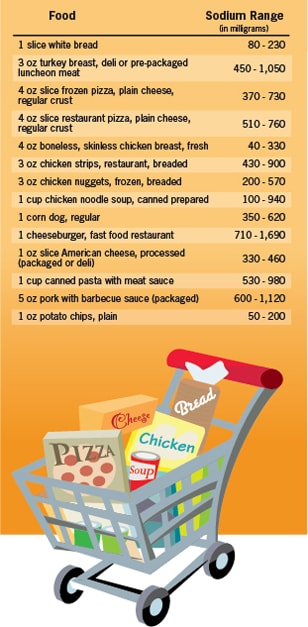
Where's the sodium? | VitalSigns | CDC
The Importance of Reading the Food Label and Nutritional Facts This percentage is the Daily Value (DV), and it's best explained with an example. First, you should know that the percent daily value is based on a 2,000 calorie per day diet. So let's say that you have a granola bar, and that granola bar lists 14% on the "Sodium" line of the label.

32 Coke Zero Sugar Nutrition Label - Labels Database 2020
eCFR :: 21 CFR Part 101 -- Food Labeling In addition to providing a column within the Nutrition Facts label that lists the quantitative amounts and percent Daily Values per serving, for a product that is packaged and sold individually that contains more than 150 percent and less than 200 percent of the applicable reference amount, the Nutrition Facts label may voluntarily provide, to ...
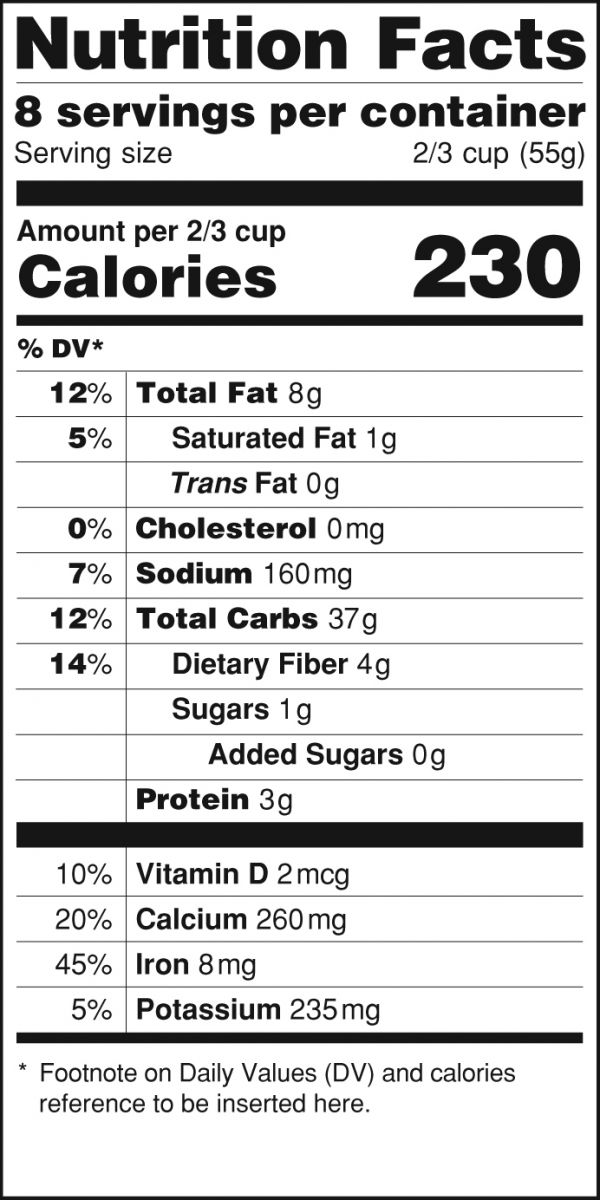
FDA Proposes Nutrition Fact Labels That Include Percent Daily Value for Added Sugars | diaTribe
Food Labels | CDC In general, eat more foods that are higher in vitamins, minerals (such as calcium and iron), and fiber. Eat fewer foods that are higher in added sugars, saturated fat, and sodium (salt), and avoid trans fat. Keep in mind that the % Daily Value of each nutrient, such as total fat of 10% in the example below, is based on eating 2,000 calories a day.

Nutrition labels to be 'easier to read,' Health Canada proposes | CBC News
What Is the Difference Between DRI & Daily Value? - SF Gate This number, called the daily value or DV, is based on the amount of each nutrient needed for a 2,000-calorie-a-day diet. You won't find the daily value on the nutrition facts label. Instead, it's used to calculate the information you will find on the label: the percent daily value.
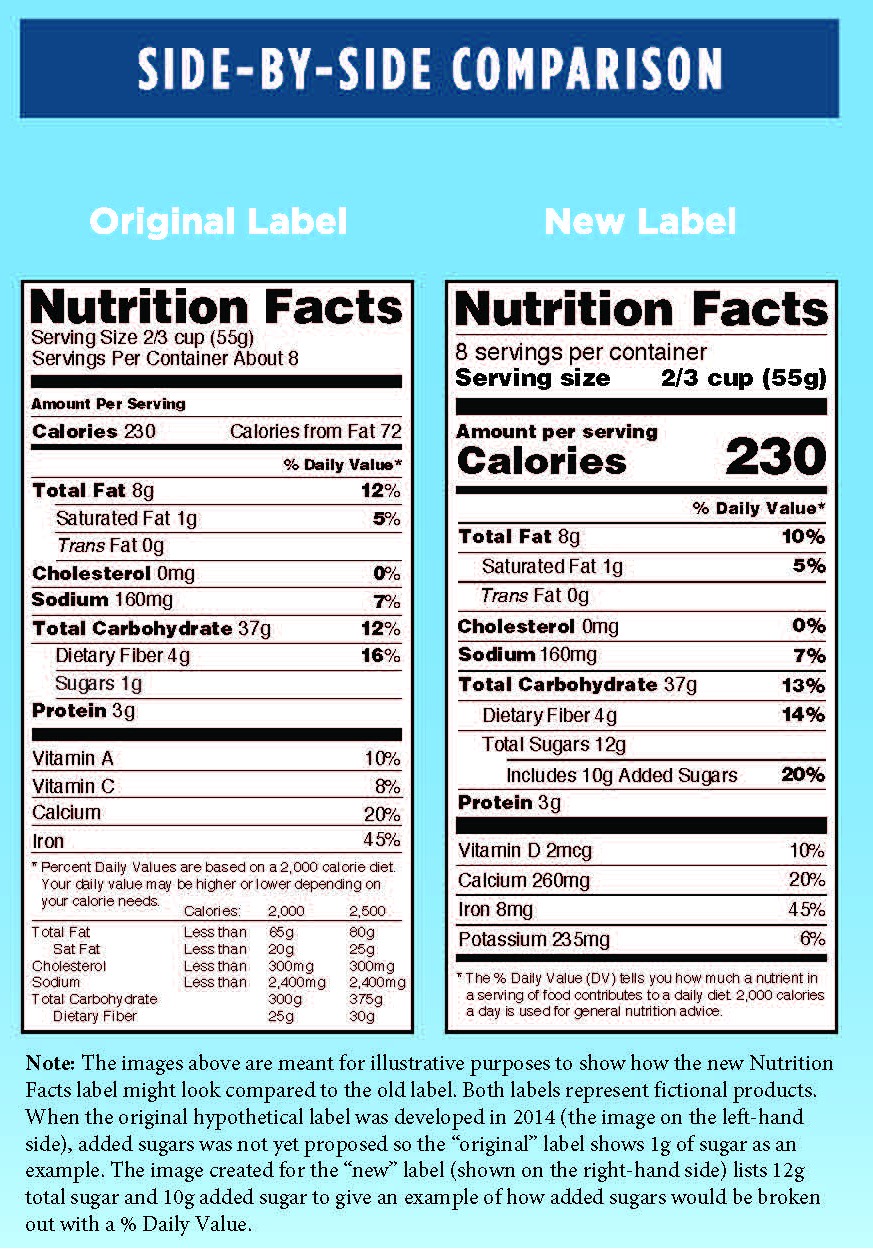
Changes to the Nutrition Facts Label: What Parents Need to Know - HealthyChildren.org
Percent daily value - Canada.ca dividing the amount of a nutrient in a serving size by its daily value, then multiplying that number by 100 For example, a food product has 3 mg of iron. The daily value for iron is 14 mg. This means that the % DV for iron would be 21%. If you would like to do your own calculation, use the equation below to help you. (3 mg ÷ 14 mg) × 100 = 21% DV
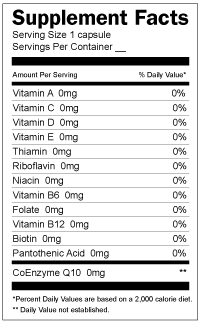
Food Nutrition Facts Label, Food Label Nutritional Analysis
Your Guide to the New Food Label | National Kidney Foundation Food labels have percent daily values listed for a set group of nutrients based on the Food and Drug Administration (FDA) recommended 2000 calorie diet. You may need more or fewer calories, so check with your kidney dietitian. Using the daily percent values and ingredients listed, you'll be able to choose foods within your special diet needs. ...
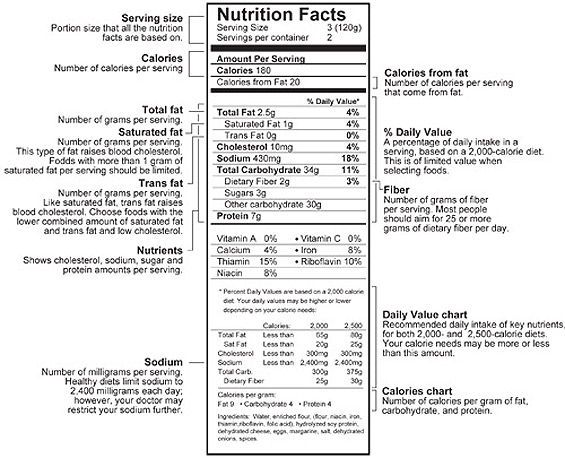
Food Labels - Eat Well To Be Well
How To Read Food and Beverage Labels | National Institute on Aging The percent Daily Value (% DV) tells how much a nutrient in a serving of the food or beverage contributes to a total daily 2,000-calorie diet. Although the average person needs 2,000 calories a day to maintain their weight, individuals may need more or fewer depending on their lifestyle.

31 The % Daily Values Found On A Food Label Are Based On - Labels Design Ideas 2020
How to Calculate % of Daily Value on Food Labels | livestrong Step 1 Find the nutrient amount on the food label. Step 2 Look up the total daily recommended amount in the USDA Dietary Guidelines. Step 3 Divide the nutrient amount by the total daily recommended value. Step 4 Multiply by 100. Things You'll Need United States Department of Agriculture (USDA) Dietary Guidelines Food label Calculator Tip

Knowledge, Attitude and Practices of University Students Regarding the Use of Nutritional ...
Make Food Labels Work for You - Calorie Control Council The % Daily Values on the food label are based on a 2,000 calorie diet. This is the amount of total calories per day that an adult, moderately active 132-pound female would need to maintain her healthy weight. A female who weighs less than 132 pounds, or who does not exercise regularly, would actually gain weight if she consumed 2,000 calories ...

food labels | Health Education | Pinterest | Food Labels, Nutrition and Food
The % daily values found on a food label are based on A. a 2,000 ... The % daily values found on a food label are based on A. a 2,000-calorie diet. B. the time of year. C. whether the person is a man or woman. D. whether the food is all-natural or processed. New answers Rating 10 Wallet.ro The % daily values found on a food label are based on a 2,000-calorie diet. Log in for more information.
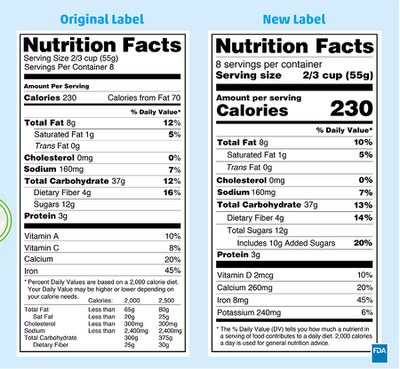
Questions and Answers About the Updated Nutrition Facts Label — Publications
The Lows and Highs of Percent Daily Value on the Label The percent Daily Value (%DV) shows how much a nutrient in a serving of food contributes to a total daily diet. The %DV can help you determine if a serving of food is high or low in a nutrient. The...
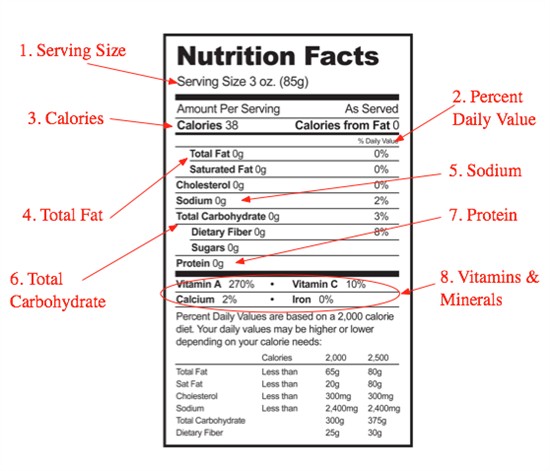
33 The Daily Value On A Food Label - Labels Information List
Nutrition Labelling - Table of Daily Values - Canada.ca Food intended for children one year of age or older but less than four years of age or for children four years of age or older and adults. 1. Fat. 44 g. 75 g. 2. Sum of saturated fatty acids and trans fatty acids. 10 g. 20 g.

Daily Values for Food Labels | Download Table
How To Calculate Percent Daily Value for Food Portions It's time to do some math! The Percent Daily Value is calculated by dividing the amount in a serving by the total recommended daily amount. Multiply that answer by 100, and you've got your %DV! For example: 3g in a serving 15g recommended per day 3/15 = 0.2 0.2 x 100 = 20%

How to read Food Nutrition Labels to help make better choices? | Webfit Wales

Nutrition Facts Information Label For Cereal Box Package Vector Daily Value Ingredient Amounts ...

33 The Term Daily Values On A Food Label Refers To - Labels 2021

How-To Guide for Reading Food Labels
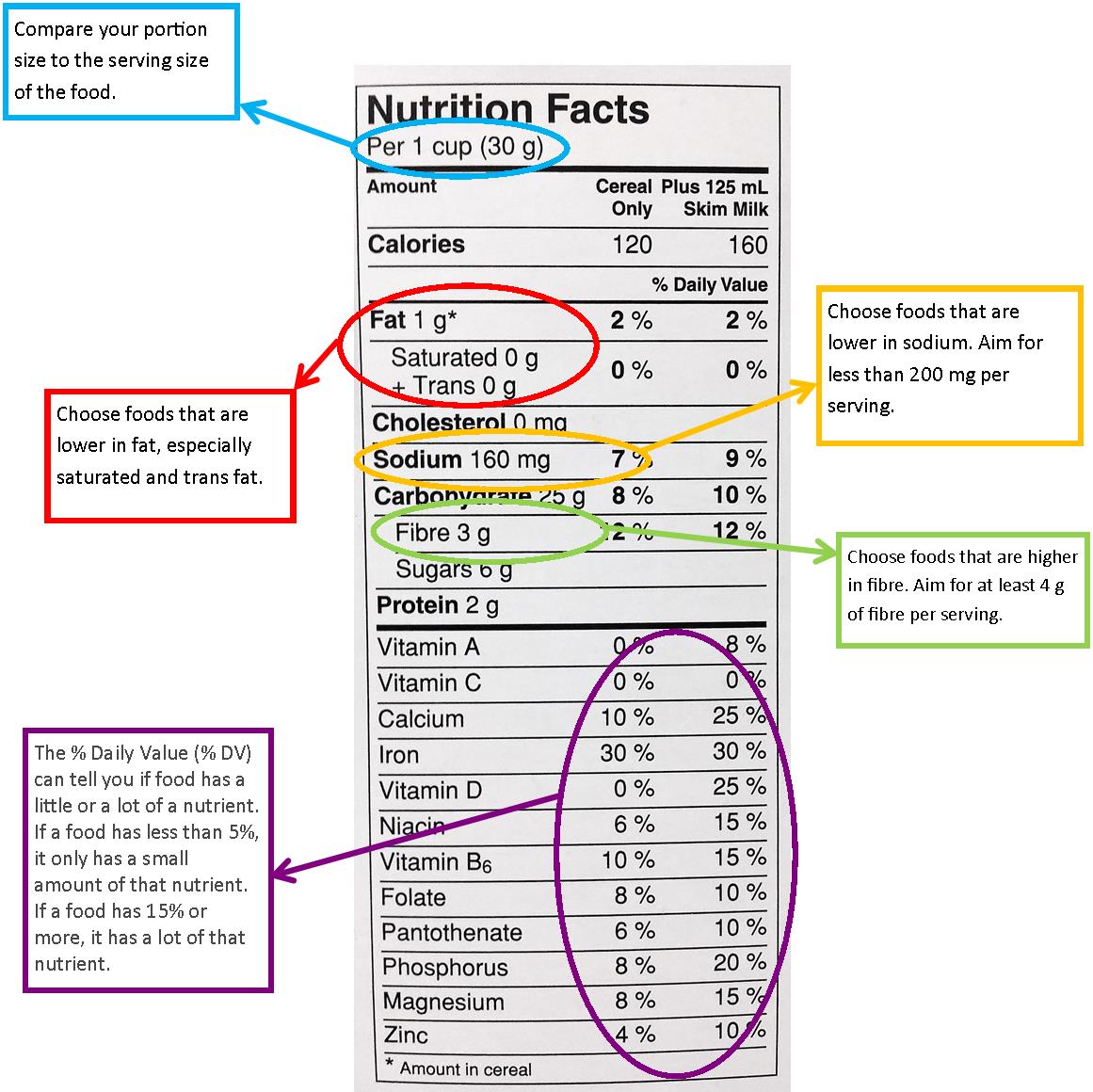
Processed Food Alternatives — Middlesex-London Health Unit
Post a Comment for "39 daily values on food labels"